




The Hidden Rules Behind Bicycle Accident Claims in NSW That Can Affect Your Compensation


56Views
The rate of cycling in Sydney has been steadily increasing over the past decade, and there has also been an increase in personal injury cases arising from dangerous cycling accidents. In the event of a crash between a bicycle and a car, the injuries are supposed to be disproportionately high as there will be no cushioning effect, no airbags, no protection. This applies even in relation to legal implications due to the Motor Accident Injuries Act 2017.
How Bicycle Accident Claims Are Classified in NSW?
The type of accident that the cyclist suffered will determine what law is applicable, the insurance company and types of evidence that will be necessary. If there has been an accident between two bikes and a motor vehicle that is registered to move along public roads, then it is a motor accident according to NSW CTP legislation. In such a case, the claim will be made against the insurer of the CTP of the at-fault vehicle regardless of whether it is a car, truck, bus or motorcycle. Other types of accidents that occur on cycleways, parks and other locations without involving a motor vehicle are treated differently.
The 2023 Rule Change and What It Means for Fault
Before 1 April 2023, cyclists who were completely or partially at fault for the accident would have their statutory compensation rights of financial assistance and medical treatment limited to six months. The 2023 changes in the Motor Accident Injuries Act extended these rights to cyclists who suffered threshold injuries and who were at fault in the accident. These amendments were effective from 1 April 2023 onwards, and prior accidents would still apply to the previous regime. This distinction is not mere administration. An accident that happens in March 2023 and another in May 2023 might result in completely different levels of statutory compensation entitlement, even if they suffer the same injuries. By consulting a bicycle accident lawyer Sydney, the right legal path will be known to ensure that the case is dealt with according to the proper law.
Above-Threshold vs. Below-Threshold Injuries
In NSW legislation, cycling injuries may fall into two categories. These include ‘threshold’ injuries where there is soft tissue damage and injuries anticipated to be healing, and ‘above-threshold’ injuries where there may be fractures, severe soft tissue injury, or neurologic damage. Claimants under the threshold category qualify for statutory benefits for treatment and loss of income but cannot make any lump sum settlement. Above-threshold cyclists qualify for compensation of a much larger amount that includes non-economic losses for pain and suffering and future earnings. The decision of whether an injured cyclist qualifies as threshold or above-threshold is made by the insurance company initially, and it is not conclusive.
Gathering Evidence That Actually Affects the Outcome
The evidence used in cycle collision cases deteriorates very quickly. Video evidence from CCTV is usually wiped out within 14 to 30 days, road signs wear off, and witnesses forget. The evidence that helps to solve the claim without going to court is usually very specific and technical, including GPS from the cycling computer with speed and route data; video evidence from the helmet or handlebar camera; and pictures of the road, drainage channel, or the line marks of the actual collision site taken on the day of the accident. When people file their claims after their hospital stay, it is usually too late.
What a Specialist Bicycle Accident Lawyer Does Differently?
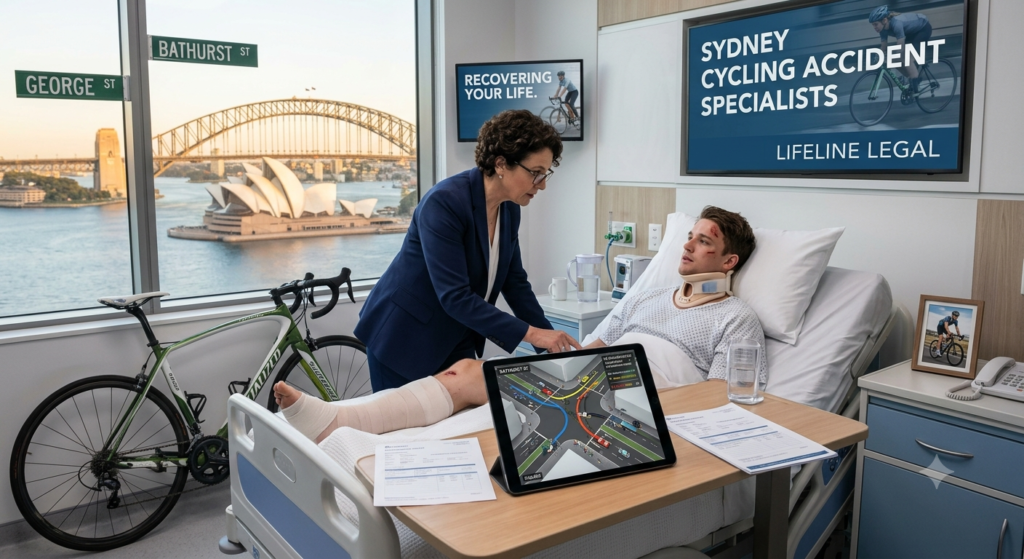
Not all personal injury lawyers are well-versed in the provisions of the Motor Accident Injuries Act with regard to cyclists. There are procedures for the CTP scheme that are different from the procedures of workers’ compensation and public liability cases. Accredited lawyers in personal injury law with the NSW Law Society who have a track record of dealing with cyclist CTP cases know how insurance companies categorise injuries, how independent medical assessors are regarded by the Personal Injury Commission, and how a lump sum claim should be structured.
Tags:KS